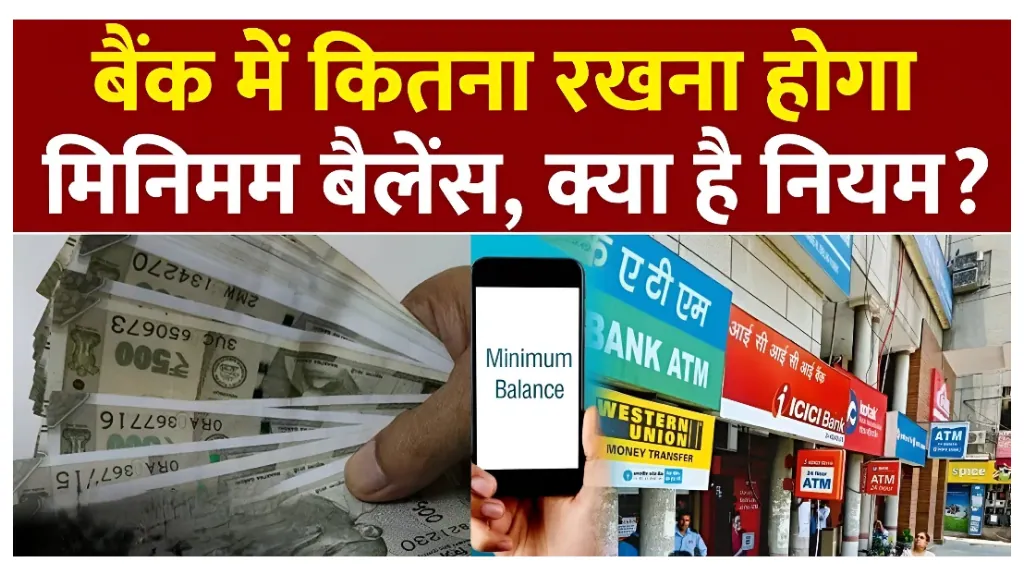

Many people open savings accounts but do not clearly understand the minimum balance rules. Banks like State Bank of India, HDFC Bank, Punjab National Bank and Bank of Baroda have different balance requirements. If your account balance goes below the required limit, penalty charges may apply. The minimum amount depends on your account type and branch location like metro, urban, semi-urban or rural. So it is very important to know your bank’s rules to avoid unnecessary deductions.
| Bank Name | Metro Area | Semi-Urban | Rural Area | Official Website |
|---|---|---|---|---|
| SBI | ₹3,000 | ₹2,000 | ₹1,000 | https://sbi.co.in |
| HDFC Bank | ₹10,000 | ₹5,000 | ₹2,500 | https://hdfcbank.com |
| PNB | ₹2,000 | ₹1,000 | ₹500 | https://pnbindia.in |
| Bank of Baroda | ₹2,000 | ₹1,000 | ₹500 | https://bankofbaroda.in |
Public Sector Banks Minimum Balance Rules
Public sector banks usually keep minimum balance requirements lower than private banks. For example, SBI savings accounts in metro cities may require around ₹3,000, while rural branches may need only ₹1,000. PNB and Bank of Baroda also follow similar rules depending on branch category. If balance falls short, banks may charge penalty plus GST. However, basic savings accounts often have relaxed conditions. Students and low-income customers usually prefer public banks because penalties are smaller compared to private banks. Always check your account variant before assuming the required minimum balance.
Private Banks Have Higher Balance Requirements
Private banks like HDFC Bank generally ask customers to maintain higher balances. In metro cities, the minimum amount can be ₹10,000 or even more for regular savings accounts. If you fail to maintain it, penalty charges may range from ₹150 to ₹600 plus taxes. However, salary accounts usually come with zero balance facility if your company has tie-up with the bank. Private banks offer better digital services, but their rules are stricter. So if you cannot maintain higher balance regularly, choose your account type wisely.
Zero Balance Accounts and Special Schemes
Zero balance accounts are available under government schemes and special banking categories. Many banks provide Basic Savings Bank Deposit Accounts where no minimum balance is required. These accounts are helpful for students, rural customers and low-income families. However, such accounts may have limits on transactions or withdrawals per month. If you need full banking features like unlimited transactions, ATM withdrawals and cheque book facility, then maintaining required minimum balance becomes necessary. So first understand your banking needs before selecting a zero balance account.
What Happens If Minimum Balance Is Not Maintained
If you do not maintain the required minimum balance, banks deduct non-maintenance charges directly from your account. These charges depend on how much shortfall is there and in which category your branch falls. Continuous penalties can slowly reduce your savings. In some cases, if your balance becomes too low for long time, your account may become inactive. To avoid this situation, keep some extra amount in your account. You can also set SMS or mobile banking alerts to track your balance regularly.
How to Avoid Minimum Balance Penalty
The best way to avoid penalty is to know your account type clearly. If you receive regular salary, convert your account into a salary account which often has zero balance rule. You can also switch to a basic savings account if your bank allows it. Keep track of your monthly expenses and avoid withdrawing full amount from your account. Maintaining a small buffer amount helps in emergency situations too. Always check official website of your bank for updated rules because policies may change anytime.
Conclusion
Minimum balance rules depend on bank, branch location and account type. Public banks usually have lower requirements while private banks demand higher balance. If you understand the rules properly, you can easily avoid penalties and manage your money smartly. Always stay updated with your bank guidelines.